
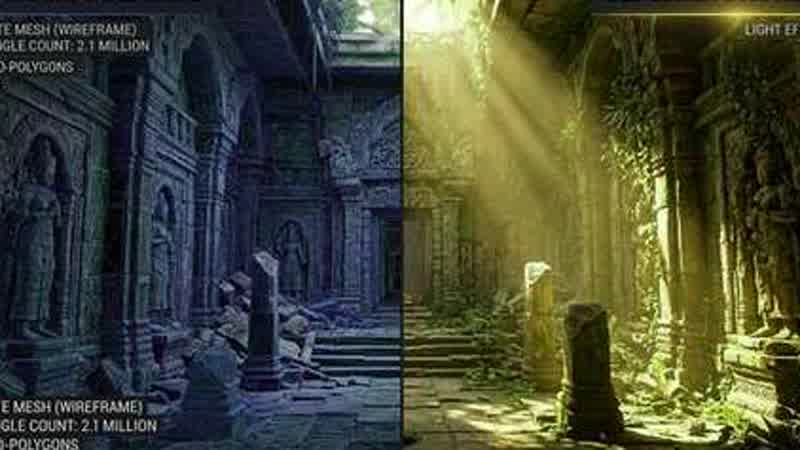
When Epic Games first unveiled Unreal Engine 5 with the groundbreaking Lumen in the Land of Nanite tech demo in May 2020, it promised an unprecedented paradigm shift for interactive entertainment: an end to geometric polygon budgets, the death of pre-baked static lighting maps, and the dawn of cinematic real-time rendering. Yet, the initial wave of early UE5 titles between 2022 and 2024 revealed that cutting-edge graphical ambition often arrived with severe technological growing pains: pervasive DirectX 12 Pipeline State Object (PSO) shader compilation stutters, catastrophic Video Memory (VRAM) spillover, and severe CPU thread contention.
Between 2025 and 2026, Unreal Engine matured dramatically. With the release of Unreal Engine 5.4, 5.5, and 5.6, Epic Games overhauled Nanite geometric streaming, introduced hardware-accelerated Work Graphs, refined Virtual Shadow Maps (VSM), and introduced specialized foliage caching pipelines. Today, the world's premier roleplaying game studios—from CD Projekt RED and Playground Games to Remedy Entertainment, Pearl Abyss, and Obsidian Entertainment—have fully transitioned their flagship franchises onto Unreal Engine 5.
Between 2026 and 2027, gamers are about to witness the arrival of the most technologically ambitious and visually breathtaking generation of roleplaying games ever conceived. At Game Vault Forum, our editorial and technical teams have analyzed developer tech presentations, engine commit logs, and hardware benchmark targets. Here is the definitive, exhaustive breakdown of the Top 10 Most Anticipated Unreal Engine 5 RPGs Launching in 2026 and 2027, exploring their narrative scope, combat mechanics, revolutionary engine pipelines, and the PC hardware required to run them.
Title: Top 10 Anticipated UE5 RPG Matrix (2026–2027)
Badge: Next-Gen Lineup
1. The Witcher 4 (Project Polaris) — CD Projekt RED's new saga debut powered by custom co-developed Nanite foliage pipelines.
2. Fable — Playground Games' whimsical, British-humor reboot featuring revolutionary open-world systemic physics.
3. Crimson Desert — Pearl Abyss' stunning open-world mercenary spectacle with physics-based environmental grappling.
4. Control 2 — Remedy Entertainment's mind-bending paranormal action-RPG set across an expanded Manhattan.
5. Avowed — Obsidian Entertainment's first-person spellcrafting and dual-wielding RPG set in the living fantasy of Eora.
6. Clockwork Revolution — inXile Entertainment's steampunk time-travel RPG with Victorian mechanical aesthetics.
7. Phantom Blade Zero — S-Game's kinetic Kungfu-punk dark fantasy action-RPG with 60 FPS motion-captured martial arts.
8. Judas — Ghost Story Games and Ken Levine's narrative rogue-lite immersive sim aboard a disintegrating starship.
9. The Outer Worlds 2 — Obsidian's satirical sci-fi space exploration sequel with expanded faction systems.
10. Tomb Raider (Next-Gen UE5 Title) — Crystal Dynamics and Amazon Games' hyper-realistic survival exploration epic.
---
1. The Witcher 4 (Project Polaris): A New Era for CD Projekt RED
After more than a decade of developing their internal proprietary REDengine (which powered The Witcher 2, The Witcher 3: Wild Hunt, and Cyberpunk 2077), CD Projekt RED made the historic decision to partner directly with Epic Games in a multi-year strategic technology alliance. Project Polaris represents the start of a brand-new multi-game Witcher saga, passing the torch from Geralt of Rivia to a new protagonist hailing from the School of the Lynx.
Revolutionary Unreal Engine 5 Pipeline:
In traditional open-world games, rendering dense forests with hundreds of thousands of individual fluttering tree leaves, pine needles, and swaying grass blades breaks geometry pipelines. In response, CD Projekt RED and Epic Games co-developed a specialized Nanite Foliage & Terrain Geometry Pipeline:
- Every tree trunk, branch, moss patch, and individual leaf is rendered as high-density Nanite micro-geometry, eliminating visible Level of Detail (LOD) pop-in when riding on horseback across the Northern Kingdoms.
- Hardware Lumen Global Illumination: Sunlight dynamically filters through dense canopy leaves with accurate subsurface scattering, casting soft, photorealistic colored shadows onto forest loam.
- Next-Gen Water Physics & Mud Deformation: Rivers dynamically swell during torrential rainstorms, leaving realistic physical wheel ruts and footprints in deep mud that dry and harden over in-game days.
---
2. Fable: Playground Games Brings Albion to Life
Playground Games—renowned across the industry for the peerless optimization and open-world photogrammetry of the Forza Horizon franchise—has spent over six years painstakingly crafting their reboot of Lionhead Studios' beloved Fable series. Published by Xbox Game Studios, Fable recaptures the dry British wit, fairy-tale whimsy, and moral consequence of the classic franchise while setting a new standard for systemic world simulation.
Game Mechanics & Visual Innovation:
- Systemic Moral Alignment: Your hero's moral choices physically transform their character model in real time. Slaying bandits and donating to orphanages grants a saintly, golden aura with flawless porcelain skin, while ruthless extortion causes dark veins, horn buds, and a swarming aura of flies.
- Virtual Shadow Maps & Procedural Terrain: Albion's picturesque cobblestone villages, lush rolling hills, and haunted witchwood swamps are brought to life through Virtual Shadow Maps (VSM) that cast pixel-perfect shadows from every thatched roof straw and cobblestone crack.
- Interactive NPC Social Graph: Every villager in Bowerstone possesses an autonomous daily schedule, personal relationships, and dynamic memory. Kicking a villager's prized chicken will cause the town guard and local tavern patrons to mock you for weeks.
---
3. Crimson Desert: Unprecedented Physics-Based Combat
Developed by Korean powerhouse Pearl Abyss (creators of Black Desert Online), Crimson Desert has stunned audiences at successive Gamescom and Summer Game Fest showcases with combat fluidity that seamlessly blends Dragon's Dogma monster climbing, Assassin's Creed parkour, and bone-crunching professional wrestling grappling.
The World of Pywel:
Players step into the worn leather boots of Kliff, a battle-hardened mercenary leader navigating the war-torn continent of Pywel. The narrative weaves faction politics, colossal mythical beasts, and ancient alchemy into an uncompromising dark fantasy sandbox.
Technical Achievements:
- Physics-Driven Environmental Interaction: Players can grapple enemies, suplex them through wooden market stalls, shatter stone pillars to crush oncoming cavalry, and set dry grass fields ablaze with torch swings to create tactical firewalls.
- Dynamic Weather System: Severe blizzards realistically freeze river surfaces, allowing players to walk across previously impassable ravines, while lightning storms can strike metal-armored knights on open plains.
---
4. Control 2: Remedy Entertainment's Paranormal Manhattan
Following the massive critical and commercial triumphs of Control and Alan Wake 2, Finnish auteur studio Remedy Entertainment is expanding the Remedy Connected Universe with Control 2. Co-developed and co-published with Annapurna Interactive, the sequel leaves the claustrophobic concrete hallways of the Oldest House to explore an expansive, paranormally corrupted Manhattan.
Gameplay Evolution & Technological Mastery:
- Action-RPG Systems: Jesse Faden gains expanded skill trees, customizable Service Weapon configurations, and telekinetic levitation abilities that interact systemically with metropolitan skyscraper architecture.
- Full Path Tracing (Neural Radiance Cache): Following Alan Wake 2's position as the visual benchmark of path tracing, Control 2 utilizes Unreal Engine 5's hardware Lumen ray tracing combined with NVIDIA DLSS 3.7 / 4.0 neural radiance reconstruction. Glass reflections across rainy Manhattan avenues, neon sign light bounces, and shifting reality-bending brutalist architecture are rendered with breathtaking photorealism.
---
5. Avowed: Obsidian's Spellcrafting Masterclass in Eora
Obsidian Entertainment—the legendary RPG creators behind Fallout: New Vegas, Pillars of Eternity, and The Outer Worlds—brings the beloved fantasy world of Eora into an immersive first-person action-RPG in Avowed.
Deep Combat Mechanics:
- Dual-Wielding Magic & Steel: Players can seamlessly dual-wield any combination of weapons: a pistol in the left hand and an enchanted rapier in the right, or two magical grimoires to unleash devastating elemental spell combos (e.g., freezing a charging Xaurip with ice magic before shattering it into a thousand crystalline shards with an enchanted warhammer).
- The Living Lands: Set in an untamed, mysterious island characterized by diverse micro-biomes, Avowed leverages UE5's material shading to render vibrant, alien bioluminescent fungal forests, sun-bleached volcanic shores, and ancient adra stone formations.
---
6. Clockwork Revolution: inXile's Victorian Time-Travel Epic
Headed by RPG luminary Brian Fargo, inXile Entertainment is developing Clockwork Revolution, a breathtaking first-person steampunk action-RPG set in the vibrant, steam-powered metropolis of Avalon.
Systemic Time Manipulation Mechanics:
- The Chronometer Device: Players discover a wondrous time-travel artifact that allows them to travel back into Avalon's past, alter key historical events, and instantly return to the present day to witness the shocking butterfly-effect consequences of their actions.
- Victorian Steampunk Aesthetics: Powered by Unreal Engine 5's Chaos physics engine, Avalon's intricate clockwork automatons, flying steam zeppelins, and sprawling industrial factories exhibit real-time gear meshing, steam volumetric dispersion, and fully destructible architectural environments.
---
7. Phantom Blade Zero: Kinetic Kungfu-Punk Action
Developed by Beijing-based indie studio S-Game, Phantom Blade Zero took the gaming world by storm with gameplay trailers showcasing martial arts combat so blisteringly fast and fluid that many skeptics initially assumed it was pre-rendered CGI.
60 FPS Motion-Captured Martial Arts:
- In collaboration with legendary Hong Kong martial arts movie directors (including Kenji Tanigaki), every sword slash, parry, dodge roll, and acrobatic aerial counter was motion-captured with professional stuntmen.
- The Dark Fantasy "Kungfu-Punk" Universe: S-Game blends traditional Chinese Wuxia martial arts, steampunk prosthetics, and cosmic occult horror. Running in UE5 at a targeted 60 FPS on PlayStation 5 and high-end PCs, the game utilizes customized low-latency input pipelines to ensure frame-perfect parrying.
---
8. Judas: Ken Levine's Narrative Immersion Revolution
Ken Levine, the visionary creative director behind System Shock 2 and the iconic BioShock series, returns with Judas, developed by his independent studio Ghost Story Games. Set aboard the Mayflower, a colossal retro-futuristic generation starship disintegrating into civil war as it carries humanity's last survivors across deep space, Judas reimagines the immersive sim genre.
The "Narrative LEGO" Architecture:
- Moving beyond linear scripted narratives, Judas introduces Levine's long-discussed "Narrative LEGO" system: three conflicting AI leaders control different factions aboard the starship. Your minute-to-minute gameplay decisions, structural repairs, and resource allocations dynamically reshape the dialogue, alliance branches, and ending sequences.
- Organic Bio-Hacking & Mechanical Telekinesis: Players wield organic plasmid-like biological mutations in one hand while firing heavy ballistic weapons with the other, utilizing UE5's Niagara particle system to render realistic electrical arcs, chemical fires, and hull-breach atmospheric depressurization.
---
9. The Outer Worlds 2: Expanded Galatic Satire
Obsidian Entertainment's second entry on our list, The Outer Worlds 2, takes the witty corporate satire, branching dialogue trees, and charismatic companion dynamics of the original cult classic and expands them onto an intergalactic canvas powered by Unreal Engine 5.
Expanded Scope & Faction Warfare:
- Set in a brand-new star system with a completely new crew of eccentric companions, The Outer Worlds 2 leaves behind the constrained hub zones of the first game in favor of massive, open planetary sandboxes.
- Enhanced tactical time dilation, wild sci-fi shrink rays, and deep faction reputation systems ensure endless roleplaying variety.
---
10. Tomb Raider (Next-Gen UE5 Title): Hyper-Realistic Survival
Crystal Dynamics, partnered with publisher Amazon Games, is building the next mainline chapter in the legendary Tomb Raider saga on Unreal Engine 5. Uniting the timeline of the classic 90s dual-pistol globe-trotting adventurer with the grit and survival instincts of the modern survivor trilogy, this next-gen epic promises the most realistic wilderness exploration game ever built.
Next-Gen Photogrammetry & Water Physics:
- Utilizing real-world drone photogrammetry scans of ancient Mayan, Egyptian, and Himalayan ruins, every stone carving, crumbling rope bridge, and subterranean cavern is rendered with Nanite micro-polygon fidelity.
- Advanced fluid dynamics simulate torrential flash floods, underwater cave diving with realistic current drag, and dynamic climbing physics where rope tension and piton anchor points dynamically respond to Lara's weight.
---
11. Hardware Preparation: What PC Rig Will You Need?
Running these next-generation Unreal Engine 5 RPGs at native resolutions with hardware ray tracing enabled will demand serious PC hardware:
| Performance Tier | Target Resolution & FPS | Recommended GPU | Recommended CPU | Minimum System RAM & Storage |
| :--- | :--- | :--- | :--- | :--- |
| Minimum Spec | 1080p @ 30–45 FPS (Low/Medium) | RTX 3060 12GB / RX 6700 XT | Ryzen 5 5600 / Core i5-12400 | 16 GB RAM + SATA SSD |
| Recommended Spec| 1440p @ 60 FPS (High Preset + DLSS/FSR) | RTX 4070 Super / RX 7800 XT | Ryzen 7 7700X / Core i5-14600K | 32 GB RAM + PCIe 4.0 NVMe |
| Enthusiast Spec | 4K @ 60–90 FPS (Epic Preset + Ray Tracing) | RTX 4080 Super / RTX 4090 / RX 7900 XTX | Ryzen 7 7800X3D / Core i7-14700K | 32–64 GB RAM + PCIe 4.0/5.0 DirectStorage |
Critical Hardware Bottlenecks to Watch:
1. The 12GB–16GB VRAM Threshold: Modern UE5 titles utilizing Nanite geometry pools and Virtual Shadow Maps consume 11GB of VRAM even at 1440p. 8GB graphics cards will suffer from severe texture thrashing and 0.1% low frame-time drops.
2. High-Speed PCIe NVMe Storage: Because Nanite streams millions of geometric micro-polygons continuously as the camera rotates, running these games from mechanical hard drives or slow external drives will trigger severe traversal stutter. A dedicated PCIe 4.0 NVMe SSD with DirectStorage support is non-negotiable.
3. CPU Single-Thread IPC & 3D V-Cache: Open-world NPC simulation routines and background physics threads demand high processor IPC. CPUs equipped with AMD 3D V-Cache (such as the Ryzen 7 7800X3D or 9800X3D) provide massive micro-stutter resistance in dense urban environments.
To determine whether your current PC is equipped for these next-gen blockbusters, benchmark your setup in our PC Game Requirements Checker, simulate real-time frame rates in our FPS Calculator, and join the upcoming release hype discussions in the Game Vault Community Forum.